Hip pain can significantly affect your ability to walk, sit, and live comfortably. When medications and physiotherapy no longer provide relief, hip replacement surgery becomes one of the most effective solutions. However, many patients are unaware that there are different types of hip replacement procedures, each suited for specific conditions and patient profiles.
Understanding these options can help you make an informed decision about what’s best for your lifestyle, age, and medical condition.
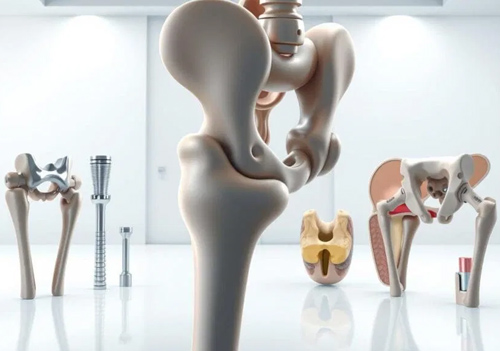
Hip replacement involves removing the damaged parts of the hip joint and replacing them with artificial components (implants). These implants are designed to replicate the natural movement of the joint, relieving pain and restoring mobility.
Total Hip Replacement is the most common type of hip surgery. It involves replacing both:
Who It’s For
Benefits
Considerations
This is often considered the gold standard for most patients.
In this procedure, only the ball (femoral head) is replaced, while the natural socket is preserved.
Who It’s For
Benefits
Limitations
This option is typically used in trauma cases rather than degenerative conditions.
Instead of removing the entire femoral head, it is reshaped and capped with a metal covering, while the socket is also fitted with a metal cup.
Who It’s For
Benefits
Considerations
Hip resurfacing is ideal for patients who want to maintain a high level of physical activity.
This technique uses smaller incisions and less tissue disruption compared to traditional surgery.
Who It’s For
Benefits
Limitations
This approach focuses on reducing surgical trauma while achieving effective results.
A highly advanced technique where robotic technology assists the surgeon in planning and performing the procedure with extreme precision.
Who It’s For
Benefits
Considerations
Robotic surgery represents the future of joint replacement, offering enhanced outcomes and longevity.
Selecting the right hip replacement depends on several factors:
A detailed consultation with an experienced orthopaedic specialist like Dr Vikramjit Singh Baath is essential to evaluate your condition and recommend the most suitable option.
Regardless of the type of hip replacement, recovery plays a crucial role in success.
Key Recovery Tips:
Most patients experience significant pain relief and improved mobility within a few weeks to months.
Hip replacement surgery is a life-changing procedure that can restore mobility and eliminate chronic pain. With multiple options available today—from traditional total hip replacement to advanced robotic-assisted techniques—patients have more choices than ever before.
The key is choosing the right procedure tailored to your individual needs. With expert guidance from Dr Vikramjit Singh Baath, you can confidently take the next step toward a pain-free and active life.
Your journey to better mobility begins with the right decision—make it informed, personalized, and guided by expertise.

Orthopro Orthopaedics provides comprehensive Orthopaedic Care with Joint Replacement specific specialist teams in a holistic manner.
© 2025. All Rights Reserved. | Designed by AMS Informatics